
Book a consultation

    What Are Porcelain Veneers?

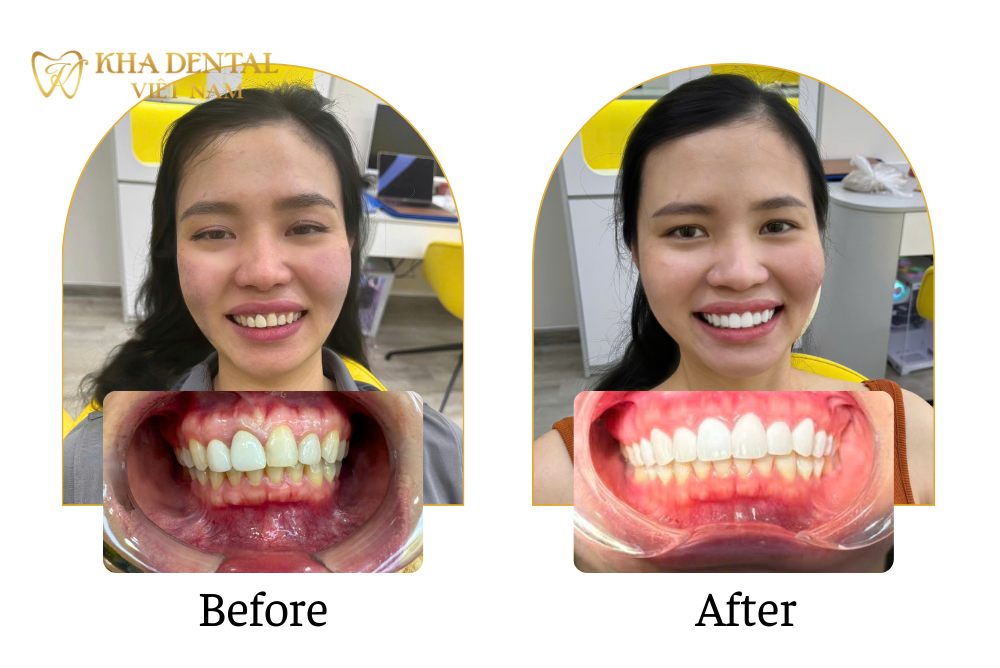
    Porcelain veneers are a cosmetic dentistry technique used to correct minor aesthetic and bite flaws (tetracycline-stained teeth, gapped teeth, slightly rotated teeth…). Depending on the specific case, the doctor will grind a thin 0.3–0.9 mm layer of natural enamel (in some cases only polishing, with no enamel grinding at all) and bond porcelain veneers onto the patient's teeth to restore aesthetics.

    Indications

    • Tetracycline- or fluoride-stained teeth.
    • Chipped biting edges.
    • Gapped teeth, slightly rotated teeth.
    • Tooth wear.
    • Malformed teeth (peg-shaped teeth, etc.).
    • Enamel hypoplasia.

    Contraindications

    • Patients who grind their teeth.
    • Severe bite misalignment.
    • Tooth wear caused by parafunctional habits.
    • Teeth with large decay-related fractures.
    • Teeth that have had root canal treatment.
    • Poor oral hygiene (severe gingivitis or periodontitis).
    VENEER CROWN
    Front surface cover
    Cosmetic improvement
    No dental anesthesia
    Full/partial cover
    For tooth decay
    Need dental anesthesia
    VENEERvsCROWN

    Comparison with porcelain crowns

    PORCELAIN VENEER PORCELAIN CROWN
    Advantages - Minimally invasive, preserving as much enamel as possible.
    - No anesthesia needed.
    - Suitable for restoring small chips, gapped teeth and darkened teeth.
    - Covers part or all of the affected tooth area => Improves chewing function.
    - Reduces pain and prevents bacteria from making contact.
    - Suitable for severely decayed teeth with a lot of tissue loss.
    Disadvantages - Not suitable for severe bite misalignment requiring comprehensive orthodontic intervention.
    - Cannot be indicated for restoring teeth with large tissue loss or missing teeth.
    - An invasive technique that grinds down a lot of tooth tissue and requires periapical/regional anesthesia.
    - Not as natural, and the patient does not feel as comfortable as with veneers right after placement.
    - Easily noticeable if a metal-ceramic crown is used.

    Porcelain Veneer Procedure

    Step 1: Examination + X-rays + intraoral and facial photos + preliminary impressions

    First, the doctor examines and records the patient's current dental condition (color, shape, cavities), and the assistant helps take periapical/panoramic X-rays to check the condition of the dental pulp. For teeth with too much tissue loss or that have had root canal treatment, the doctor will indicate a porcelain crown instead of a veneer. Finally, the doctor takes preliminary impressions of both jaws to plan detailed treatment and to make a wax-up model and a temporary mock-up.

    Step 2: Treatment planning + discussing the plan with the patient + trying the sample teeth + adjusting to the patient's aesthetic requirements

    The doctor and the lab technician design sample teeth according to the patient's aesthetic requirements. The doctor then has the patient wear the sample teeth in the mouth and adjusts the tooth shape to harmonize with the natural beauty of the patient's face.

    Step 3: Tooth preparation, impressions and shade matching + wearing temporary teeth

    After the doctor and patient agree on the treatment plan, the doctor prepares the teeth, matches the tooth shade and takes impressions. The patient wears temporary teeth after preparation.

    Step 4: Veneer try-in + veneer bonding

    Once the lab completes the veneers, the doctor tries them in the patient's mouth, fine-tunes and adjusts the bite so there is no interference. They are temporarily bonded with temporary cement so the patient can see how they will look after placement. Once the patient agrees and decides to proceed, the doctor bonds the veneers with adhesive cement.

    Step 5: Check + bite adjustment

    Within 1–3 days, the patient is scheduled for a follow-up to check everything from the periodontal tissue to the teeth and bite. If there is any bite problem it is adjusted right away.

    Step 6: Regular follow-ups as scheduled

    The doctor schedules regular follow-up visits to examine and detect and promptly handle any periodontal or bite complications (if any).

    When Should You Get Veneers?

    Generally, porcelain veneers are used when teeth have problems such as:

    People whose teeth have become discolored and unattractive – yellowish, dull, tetracycline- or fluoride-stained – and cannot be corrected by teeth whitening.

    People with gapped front teeth, butterfly-shaped incisors, or uneven tooth sizes in each arch.

    People whose teeth are cracked or chipped from injury without affecting the dental pulp, or whose tooth edge is fractured by no more than ⅓ of the crown.

    Veneer-09-min

    Are Porcelain Veneers Good? Why Are They Becoming More Popular?

    Today, porcelain veneers are one of the most popular aesthetic solutions for teeth because they bring many practical benefits:

    High aesthetic results: Porcelain veneers can correct flaws in shape and color, giving teeth a radiant new look so you can smile with confidence.

    Preserves as much natural tooth as possible: When placing veneers, the doctor grinds only a thin layer on the tooth surface, thereby preserving as much natural tooth tissue as possible.

    Long lifespan: Porcelain veneers last 8–10 years, even longer with good care and correct technique by a skilled, experienced specialist doctor.

    Step 1

    Examination, X-rays, intraoral photos
    Step 2

    Treatment planning and discussion with the doctor

    Step 3

    Tooth preparation and temporary teeth
    Step 4

    Bonding porcelain veneers, check and bite adjustment

    Why choose Kha Dental as a reputable clinic for porcelain veneers?

    The success of veneers depends largely on professional expertise, skill and the right materials for making veneers. At Kha Dental, patients experience a standard, methodical veneer procedure that delivers the most natural, most beautiful and most comfortable veneers.

    Master's degree - DoctorNguyen Huu TrungGeneral Dentistry and Aesthetic Restorative Dentistry at Kha DentalLearn more
    vnc Experienced doctors with solid expertise

    The medical team at Kha Dental, highly skilled and with many years of experience, works with patients to create a detailed, meticulous plan best suited to their dental condition and calculates so that the least possible tooth is ground while still meeting technical requirements, preserving as much natural tooth tissue as possible and delivering satisfying results and the most confident, comfortable smile.

    vnc Modern facilities

    Kha Dental invests in modern facilities and complete equipment such as the Vatech SmartPlus scanner and DMG impression material… to make the veneer process smooth, comfortable and precise.

    vnc Genuine, safe veneer materials

    Currently, the materials Kha Dental selects for making veneers are Emax ceramic from Europe and Lisi ceramic from Japan. These are genuine, good-quality ceramics suited to making veneers. Depending on the specific case, the patient and doctor will discuss and choose the ceramic that suits the patient's dental condition and budget.

    vnc 100% improvement in aesthetics and chewing function

    Veneers at Kha Dental give patients the most natural, brightest white smile while keeping the bite stable and chewing as comfortable as with real teeth.

    vnc Reasonable cost matching treatment quality

    Veneer costs at Kha Dental are designed and set reasonably, in line with treatment quality. Patients can rest assured and trust us in treatment.

    How much do porcelain veneers cost?

    The cost of porcelain veneers depends on the condition of the teeth, the number of veneers indicated and the chosen material. Veneer prices range from 6,500,000 (Emax) to 10,000,000 (Lisi). Our clinic is committed to open, transparent costs, and all costs are communicated and agreed by the patient before the service is carried out. Every month there are many attractive promotions to save you money. Prices and detailed costs are personalized to the specific condition of each case, so patients need to visit the clinic in person for an examination and an accurate quotation.

    Things to note when getting porcelain veneers

    Before treatment

    • Choose a reputable dental clinic.
    • Have any oral diseases checked and treated stably (if any).
    • Maintain good oral hygiene.

    After treatment

    • Eat soft foods, avoid foods that are too chewy or too hard, and do not use your teeth for the wrong purposes (opening beer bottles, tearing packaging, biting nails…).
    • Keep oral hygiene good, and also use an interdental brush, water flosser and mouthwash to clean the spaces between teeth.
    • Do not smoke, to protect the periodontal tissue.
    • Avoid letting colored foods such as soy sauce and coffee stay in contact with the porcelain for too long, to keep the veneer color for longer.

    CUSTOMER TESTIMONIALS AFTER PORCELAIN VENEERS

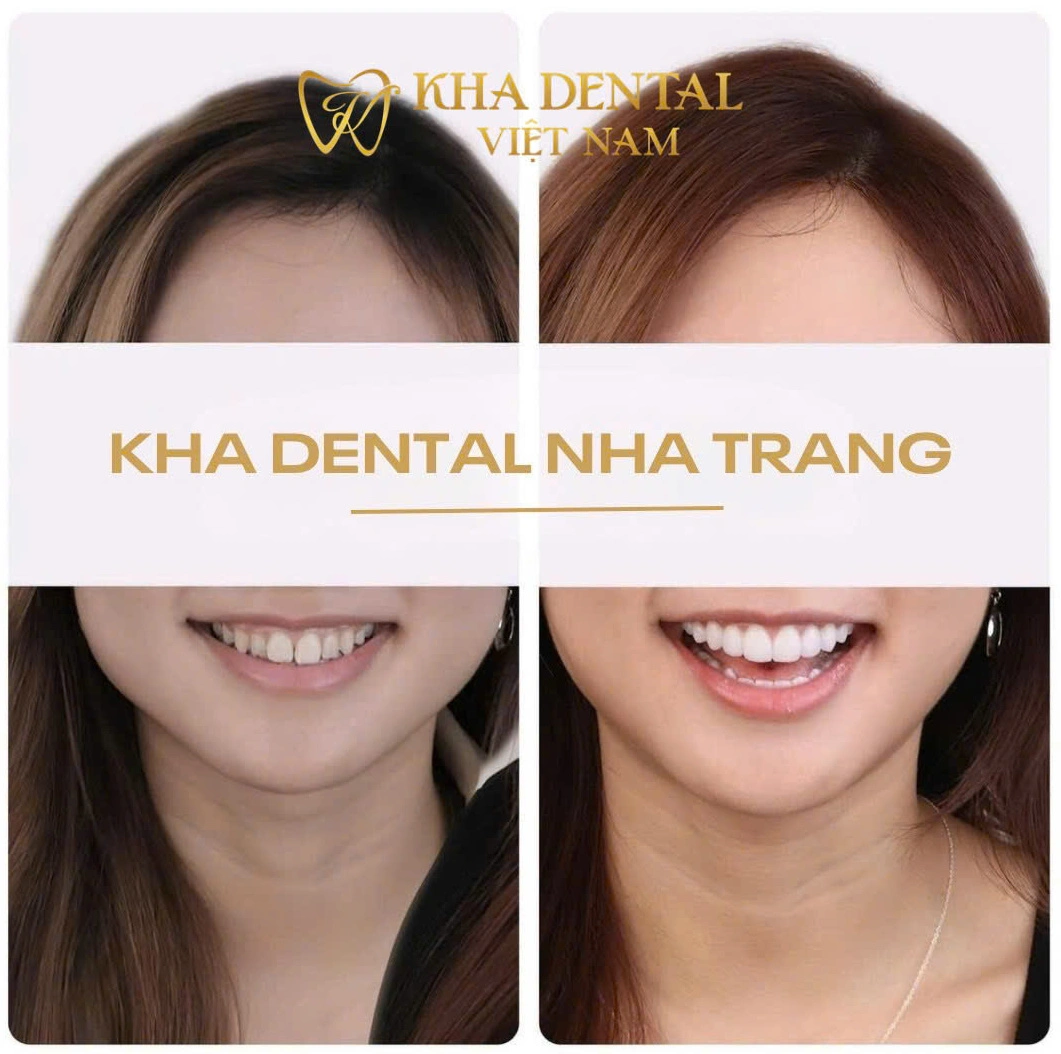
    Kha Dental Nha Trang is the address many customers choose for porcelain veneers, preserving as much natural tooth as possible and giving a bright, healthy smile with outstanding aesthetics.
    Back to Top
    • CONSULT WITH THE DOCTOR'S ASSISTANT NOW

      Register now to get advice as early as possible, along with many attractive offers